
"Come quickly, I am drinking the stars!"
Dom Perignon 1693
"Drinking the stars?" Dom Pérignon spent his life trying to get rid of them
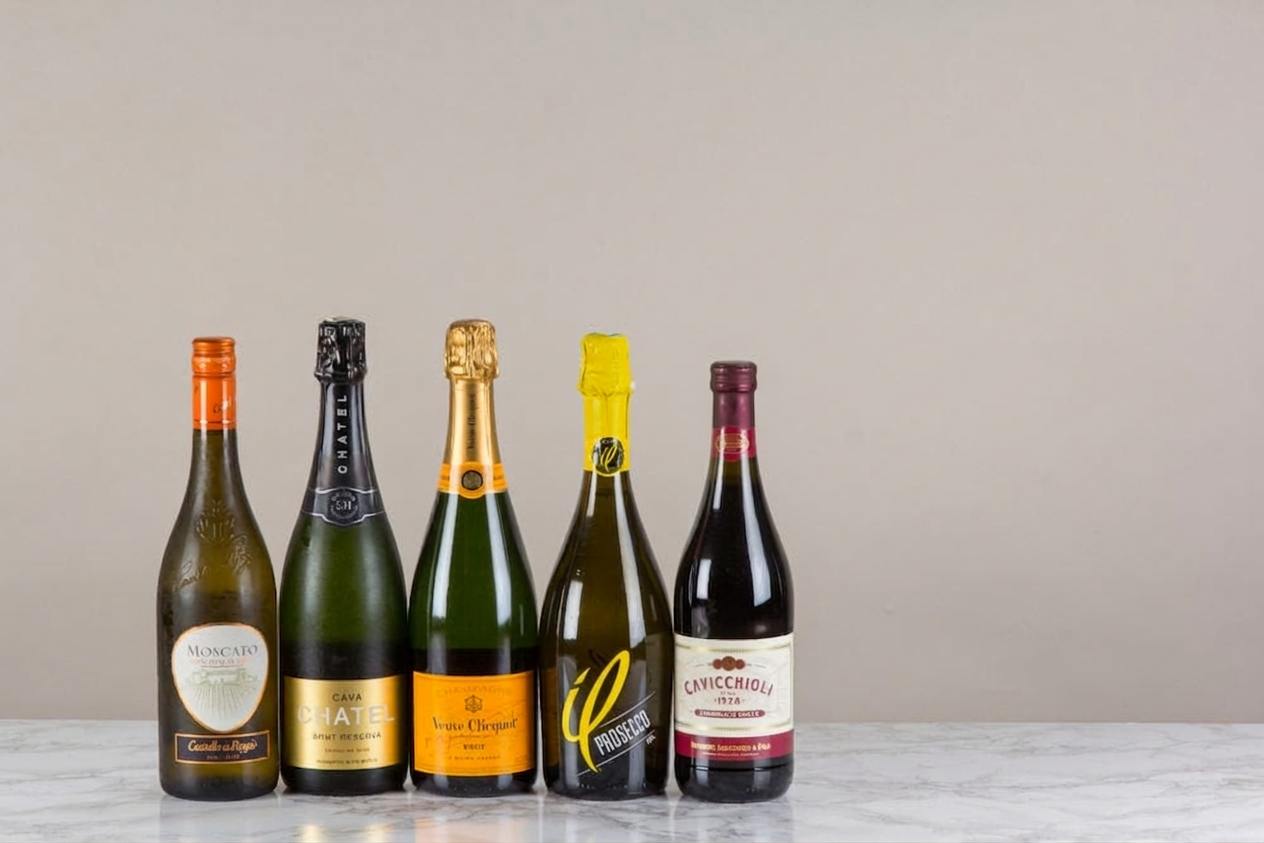
A Primer on Global Sparkling Wines
It's one of the most well-known beverages on the planet, accounting for nearly 7% of all wine produced globally. And whether or not it's your go to for celebrations or a feature of your Sunday brunch, there is nothing quite as fun as sparkling wine!. I also consider it to be one of best food pairing wines due to its universality of flavor, mouthfeel and of course that "chorus of tiny bells" you get as it goes down with every sip. Let's review the major players, a quick history of sparkling wine and the various methods of production.
The Real Story of Sparkling Wine's Origins
Popular legend credits a 17th-century French monk, Dom Pérignon, with inventing Champagne after stumbling upon bubbles in his cellar and famously declaring he was "drinking the stars." The real story is less romantic but more interesting: sparkling wine likely emerged first in England, not France. English merchants imported still wine from the Champagne region, added sugar, and bottled it in thick, coal-furnace-forged glass strong enough to survive a secondary fermentation that French glass of the era could not. Dom Pérignon's actual legacy ran in the opposite direction; as cellar master at the Abbey of Hautvillers, he considered bubbles a winemaking flaw and spent his career trying to eliminate them, focusing instead on innovations in vineyard selection, blending, and pressing. It wasn't until decades later that the trapped carbonation was embraced rather than avoided, paving the way for the méthode champenoise that defines traditional sparkling wine production today.
If Champagne Can Only Come from France, Why Does "California Champagne" Exist?
Here's the loophole: the US didn't join the international treaty system protecting names like Champagne until 2003, and even then the matter wasn't fully settled. In 2006, the US and EU signed a wine-trade agreement in which the US agreed to stop allowing new uses of semi-generic terms like Champagne, Burgundy, Port, and Chablis. But a grandfather clause let any US producer already using "Champagne" on its labels keep doing so - which is exactly why you'll still find Korbel's "California Champagne" on shelves today, a legal relic from before the rule took hold.
Champagne
Champagne hails from the Champagne region of northeastern France, where chalky soils and a cool climate create the ideal conditions for high-acid base wines.
Champagne
Champagne hails from the Champagne region of northeastern France, where chalky soils and a cool climate create the ideal conditions for high-acid base wines.
Traditional grapes: Chardonnay, Pinot Noir, and Pinot Meunier, traditionally blended and aged via the labor-intensive méthode champenoise (secondary fermentation in the bottle).
Flavor profile: Expect notes of brioche, toasted almond, citrus, and green apple, with a fine, persistent mousse and a mineral-driven backbone that sets it apart from other sparklers.Traditional grapes: Chardonnay, Pinot Noir, and Pinot Meunier, traditionally blended and aged via the labor-intensive méthode champenoise (secondary fermentation in the bottle).
California Sparkling Wine
American sparkling wine, much of it produced in cooler California regions like Carneros, Anderson Valley, and the Russian River Valley, often follows the Champagne blueprint using the same three grapes (Chardonnay, Pinot Noir, Pinot Meunier) and the same traditional method. Many top producers were even founded by Champagne houses seeking similar climate conditions.
Flavor profiles: They run a wide range from crisp and citrusy to riper, fruit-forward styles with notes of pear, apple, and brioche, generally a touch softer and more approachable than their French counterparts.
Cava
Origin: Cava is Spain's answer to Champagne, produced primarily in the Penedès region near Barcelona using the same traditional bottle-fermentation method. Rather than Chardonnay and Pinot Noir, Cava typically uses native Spanish grapes like Macabeo, Xarel-lo, and Parellada (Chardonnay is also permitted).
Flavor profile: The result is a wine with bright citrus, green apple, and herbal notes, often with a slightly earthier, more rustic character and a noticeably friendlier price point.
Sekt
Origin: Sekt is Germany's sparkling wine, made throughout the country but with quality examples concentrated in regions like the Rheingau and Mosel.
Grapes: While basic Sekt can be made from any grape using a tank method, the premium category (Winzersekt) uses traditional method production and classic German varieties like Riesling.
Flavor profile: Riesling-based Sekt delivers vibrant acidity with notes of green apple, citrus, and white flowers, often with the steely minerality Riesling is known for.
Prosecco
Origin: Prosecco comes from the Veneto and Friuli-Venezia Giulia regions of northeastern Italy, primarily around the towns of Conegliano and Valdobbiadene.
Grapes: Made from the Glera grape using the Charmat method (tank fermentation rather than in-bottle),
Flavor profile: Prosecco emphasizes fresh, fruity character over complexity. Expect light, easy-drinking notes of green apple, pear, and white flowers, with a softer, less aggressive bubble than traditional-method sparklers.
Crémant
Origin: Crémant refers to traditional-method sparkling wines made in French regions outside Champagne, with Crémant de Loire, Crémant d'Alsace, and Crémant de Bourgogne among the most recognized.
Grape varieties: shift by region: Chenin Blanc and Cabernet Franc in the Loire, Pinot Blanc and Riesling in Alsace, Chardonnay, and Pinot Noir in Burgundy. Despite using the same labor-intensive method as Champagne,
Flavor profile: Crémant tends to be fruitier and more immediately approachable, with flavors ranging from orchard fruit and citrus to light florals, all at a fraction of Champagne's price.
Lambrusco
Origin: Lambrusco originates in the Emilia-Romagna region of north-central Italy, centered around Modena and Reggio Emilia,
Grapes: Made from a family of grapes also called Lambrusco and typically produced using the Charmat or ancestral method, it ranges from dry (secco) to sweet (dolce) and from lightly sparkling (frizzante) to fully sparkling (spumante).
Flavor profile: Expect juicy dark berry and plum notes with a slightly tannic, savory edge, a style traditionally paired with the rich, fatty foods of the region rather than served as an aperitif
Pét-Nat
Origin: Pétillant Naturel, or Pét-Nat, is the oldest sparkling wine method in existence, predating Champagne's traditional method by centuries. Once a rustic farmhouse style nearly forgotten, it's seen a major revival over the past decade among natural wine producers across France, Italy, the US, and beyond.
Grape varieties: No single grape defines Pét-Nat; since it's a production method rather than a regional designation, producers use whatever local grape is on hand, from Chenin Blanc and Gamay in France to Riesling and Trebbiano elsewhere.
Flavor profile: Pét-Nat tends to be cloudier, funkier, and less predictable than other sparklers, with a softer, less refined bubble and flavors that lean toward bready, yeasty, or slightly tart notes alongside the base fruit, often bottled with little to no dosage so it reads drier and more rustic overall.
Methods of Production
Therer are a variety of ways to make sparkling wine, ranging labor and time intensive to bulk and quicker production.
Méthode Traditionnelle (Traditional Method)
Secondary fermentation happens inside the bottle itself, creating fine, persistent bubbles. Used for Champagne, Cava, Crémant, and premium Sekt. The most labor-intensive and expensive method, often involving years of aging on the lees.
Charmat Method (Tank Method)
Secondary fermentation happens in large, pressurized steel tanks rather than individual bottles, then the wine is bottled under pressure. Faster and cheaper, producing larger, softer bubbles that highlight fresh fruit aromas. Used for Prosecco and most basic Sekt.
Méthode Ancestrale (Ancestral Method)
The oldest method and the precursor to all others. Wine is bottled before the first fermentation finishes, so it completes inside the bottle, trapping natural carbonation with no added sugar or yeast. Used for Pét-Nat and some rustic Lambrusco; bubbles tend to be unpredictable and the wine often slightly cloudy.
Transfer Method
A hybrid: secondary fermentation happens in the bottle (like the traditional method), but the wine is then transferred to tanks for filtering and dosage before re-bottling. Retains some traditional-method character at lower cost. Used occasionally for larger sparkling wine brands and some sparkling wine outside Champagne.
Carbonation (Injection Method)
Simplest and cheapest: carbon dioxide is injected directly into still wine, like soda. Produces large, fast-dissipating bubbles. Used for the most basic, inexpensive sparkling wines, rarely for anything quality focused.
Finally: Here's three traditional pairing and three untraditional pairings for your next sparkling wine adventure.
Classic Pairings
Oysters - The bright acidity and minerality of a traditional-method sparkling wine like Champagne or Crémant cuts through the oyster's brininess while echoing its salinity, a pairing built on contrast and harmony at once.
Fried Chicken - The bubbles and acidity slice through the richness and crunch of the fried coating, while the wine's effervescence cleanses the palate between bites, a favorite pairing among sommeliers for good reason.
Soft, Bloomy-Rind Cheese (Brie, Camembert) - The wine's acidity balances the cheese's buttery fat, while its fine bubbles lift the richness rather than letting it sit heavy on the palate.
Unconventional Pairings
Potato Chips - This isn't a gimmick: the salt amplifies the wine's fruit and acidity, while the bubbles scrub away the oily residue, resetting your palate for the next handful. Cava or Prosecco work especially well here, since their fruitier, less austere profile plays nicer with salt than bone-dry Champagne.
Popcorn - Similar logic to chips, but with a buttery, slightly sweet edge that pairs surprisingly well with the toasty, brioche-like notes in a traditional-method sparkling wine.
Spicy Thai or Sichuan Food - The wine's bubbles and slight sweetness (in off-dry styles like Prosecco) tame the heat, while its acidity stands up to bold, fish-sauce-and-chili-driven flavors that would flatten a still wine.
What is the Difference between White Zinfandel and Rose Wine?
A reader asked what the difference is between a rose wine and the much belittled white zinfandel since rose wines are becoming much more popular and are being produced more widely by wineries. So I asked my favorite Wine Geek and this is what he said:
The short answer is that while both wines are made in much the same way; White Zinfandel is sweeter and pinker than most roses which tend to be dry and range in color from onion skin to deep-salmon to candy apple red.
The long answer: Rose wines have been made in France for centuries. Wine Writer Tom Stevenson postulates in the Sotheby's Wine Encyclopedia that Rose has been made for more than 2600 years. The best come from Tavel in the Rhone Valley and Bandol in Provence. Rose is made from many different old world grapes, but some of the most comonly used grapes in French Rose are Grenache, Mouvedre, Syrah and Cinsault.
White Zinfandel, which was first made in California by Bob Trincheroof Sutter Home Winery, was the result of a fortuitous accident. And, as the name clearly states, is made from Zinfandel grapes. In an effort to create a richer Zinfandel from his vineyards in Amador County, Trinchero removed 550 gallons of juice from the fermenting tank to allow a higher skin to juice ratio. The theory was that this would make the resultant Zinfandel wine "richer" (Think Kool-aid here...the less water to powder...the richer the flavor).
But Trinchero had a problem, he now had 550 gallons of white juice on his hands and no place to put it. So he made wine and sold it in 1973 and 1974 under the name White Zinfandel; while the wine had its trademark pink color it was also dry. In 1975, a "stuck fermentation" (the fortuitous accident) resulted in a higher than normal amount of residual sugar being left in the wine, and the rest is history. It is estimated more than 10 million cases of White Zinfandel are sold each year. While it has been somewhat vilified by wine snobs, (Adult Soda Pop) it should be remembered that many wine drinkers today first started with White Zin and graduated to more complex varietal wines. I personally make a habit of shaking the hand of any White Zin drinker...after all that means they are not drinking beer or spirits! In addition, the creation of White Zinfandel helpt to save many of California's oldest Zinfandel vineyards from being re-planted.
The rest of the long answer: The best Rose's are dry, and range in color from a very pale vin gris color to deep red. They are made in three ways:
- Bleeding: Black grapes are allowed to press themselves under their own weight. The resulting juice is fermented and results in a very fresh flavored, fruity rich wine.
- Pressing: Black grapes are pressed just long enough for the juice to take on the color of rose. The result is not as rich as bleeding.
- Limited Maceration: Made in the same way as red wines, but the skin contact with the juice is cut short to create the appropriate color and flavor profile.
The really quick answer: White Zin is sweeter and pinker than traditional Rose, but both are refreshing, fruity, delightful and best enjoyed on a warm summer day.